
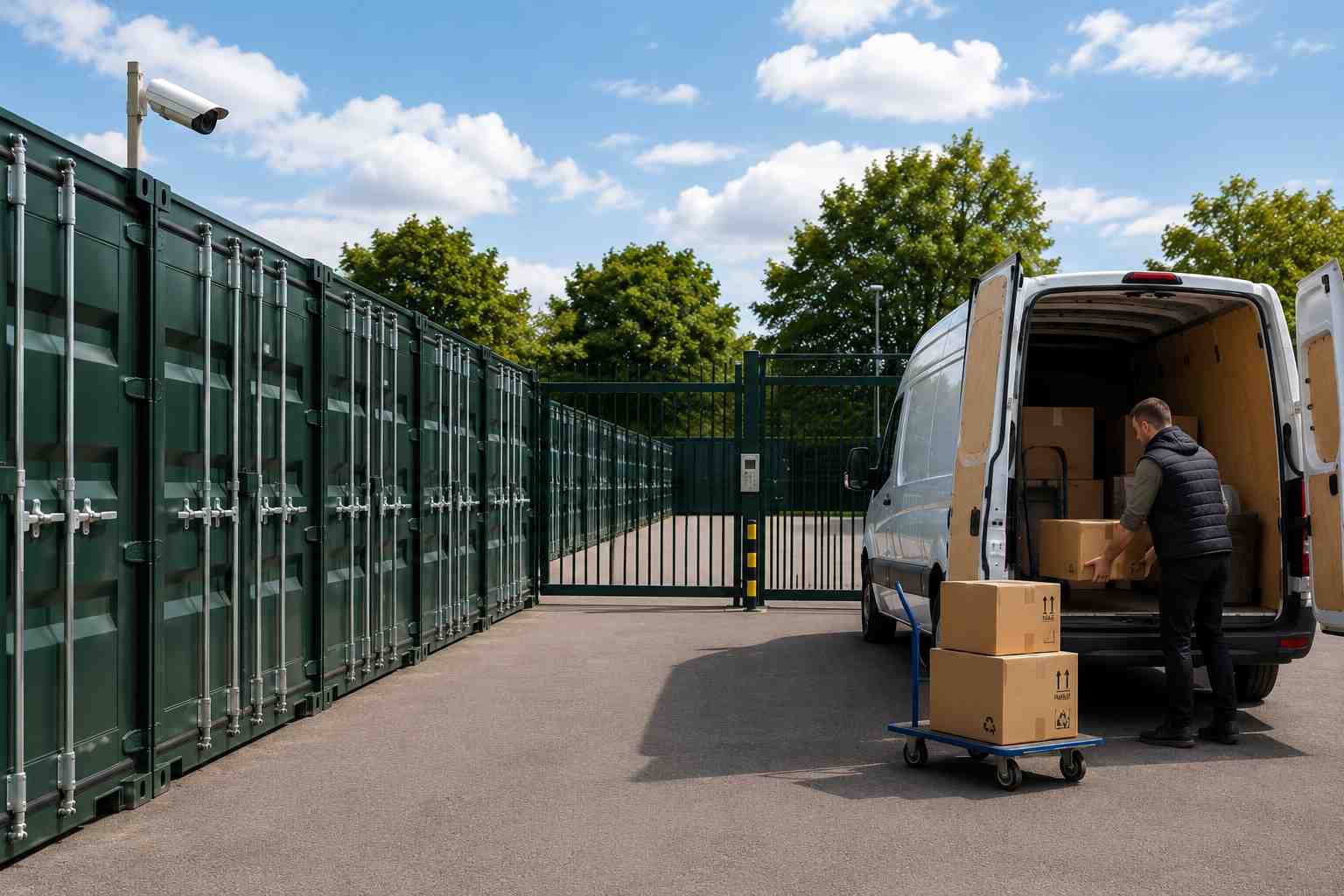
Choosing a self-storage space involves more than finding somewhere large enough to hold your belongings.
Whether you are moving home, renovating, reclaiming space in your garage or looking for somewhere to store business stock, the right storage solution should make your life easier. It should protect your belongings, provide convenient access and give you enough flexibility to adapt when your circumstances change.
Before renting a storage unit, container or yard, it is important to compare more than price alone. Security, accessibility, storage size, rental terms, insurance and site conditions can all affect how suitable the space is for your needs.
In this guide, we explain the most important self-storage essentials to consider so that you can choose a secure, practical and cost-effective solution.
What Should You Look for When Choosing Self-Storage?
A good self-storage provider should offer a balance of:
- Reliable site security
- Convenient access
- A suitable amount of space
- Clear and flexible rental terms
- Clean, usable storage areas
- Straightforward pricing
- Helpful customer support
- Options for household and business storage
Your priorities may differ depending on what you intend to store. A homeowner storing furniture during a renovation will have different requirements from a tradesperson storing tools or an online retailer managing additional stock.
However, security and accessibility should always be near the top of your checklist.
1. Make Security Your First Priority
When you place belongings away from your home or business premises, you need confidence that they will be properly protected.
A secure self-storage facility should use several layers of security rather than relying on a single lock. These layers help control who can enter the site, monitor activity and protect individual storage spaces.
Look for a Secure Gated Compound
A gated compound creates a clear boundary between the storage site and surrounding areas.
Entry should be restricted to authorised customers and staff. Coded access or another controlled entry system can help prevent unauthorised visitors from entering the facility.
Before choosing a storage provider, ask:
- Is the entire site gated?
- How is entry controlled?
- Can access codes be shared or changed?
- Does the gate close automatically?
- Is access monitored?
A secure perimeter is particularly important if you are storing valuable business equipment, trade tools, stock or vehicles.
Check for CCTV Monitoring
CCTV can discourage suspicious behaviour and provide a record of activity around the storage site.
Ideally, cameras should monitor the facility continuously and cover important areas such as:
- Entry and exit points
- Vehicle access routes
- Storage unit areas
- Yard spaces
- Shared loading areas
It is worth confirming whether the site is monitored around the clock and whether cameras cover the area surrounding your individual storage space.
Consider the Security of the Individual Unit
Site security is only one part of the picture. Your container, unit or yard should also have a strong individual locking system.
Ask whether a lock is supplied, whether you need to purchase your own and whether additional locks can be fitted.
For business users, it may also be sensible to keep an up-to-date inventory of stored equipment and restrict access to trusted employees.
2. Choose Storage That Is Easy to Access
Accessibility is not simply about how close the facility is to your home or workplace. It also covers how easily you can enter the site, reach your unit and load or retrieve your belongings.
Check the Access Hours
Some storage facilities operate within fixed opening hours, while others provide more flexible access.
Think about when you are most likely to need your belongings. A business owner may need to collect equipment early in the morning, while someone moving house may want to load or unload during an evening or weekend.
Before booking, check:
- The site’s standard access hours
- Whether weekend access is available
- Whether access changes on bank holidays
- What happens if you need urgent access
- Whether there are any additional access charges
Convenient access can be especially valuable for tradespeople, online retailers and businesses using storage as an extension of their everyday operations.
Look for Drive-Up Access
Being able to drive directly to your container or storage area can make loading and unloading considerably easier.
Drive-up access reduces the distance you need to carry:
- Furniture
- Heavy boxes
- Building materials
- Tools and machinery
- Stock and deliveries
- Garden equipment
It can also save time if you expect to visit your storage space regularly.
When comparing sites, consider the width of the access routes, available turning space and whether larger vans can comfortably reach the storage area.
Consider Physical Accessibility
Anyone with limited mobility should ask whether the facility and storage area are suitable for their requirements.
Useful questions may include:
- Is there step-free access?
- Is the ground level and well maintained?
- Can a vehicle park close to the unit?
- Is assistance available when moving in?
- Are the locks and doors easy to operate?
It is better to discuss accessibility requirements before signing a rental agreement.
3. Select the Right Type of Storage Space
Different storage formats are suited to different uses. Understanding the available options can help you avoid paying for space that does not match your needs.
Self-Storage Containers
Storage containers are suitable for a wide range of household and business belongings, including:
- Furniture and boxed possessions
- Seasonal household items
- Tools and trade equipment
- Office furniture
- Documents and archived materials
- Online retail stock
- Packaging and business supplies
Containers can provide a practical alternative to filling a garage, spare room, workshop or office with items that are not required every day.
Storage Yards
A secure storage yard may be more appropriate for larger equipment, trailers, vehicles, materials or items that do not need to be kept inside a container.
Yard storage can be useful for:
- Tradespeople
- Contractors
- Landscaping businesses
- Equipment owners
- Vehicle owners
- Growing businesses with bulky materials
Always confirm which items and vehicles are permitted before booking a yard.
A Combined Container and Yard
Some businesses require both enclosed storage and external space.
For example, a tradesperson might use a container for tools and materials while using an adjoining yard for a vehicle, trailer or larger equipment.
A combined setup can create a practical business base without the cost or commitment of moving into larger commercial premises.
4. Calculate How Much Storage Space You Need
Choosing the correct size is essential. A space that is too small can become difficult to organise, while an unnecessarily large space may increase your monthly costs.
Start by creating an inventory of everything you plan to store. Group similar items together and estimate how much floor space they will require.
Remember to account for:
- Shelving
- Walkways
- Doors and access points
- Awkwardly shaped items
- Additional stock or belongings
- Space required to move items safely
Avoid packing the unit so tightly that you cannot reach anything at the back. Leaving a central walkway can make the space much easier to use.
If your storage needs may grow, choose a provider that allows you to rent additional space subject to availability.
5. Check That the Space Is Suitable for Your Belongings
Before moving in, inspect the storage space or ask the provider about its condition.
The area should be clean, secure and suitable for the type of belongings you intend to store.
Prepare Items Properly
Even in a secure storage container, correct packing can help protect your belongings.
Use:
- Strong, stackable boxes
- Protective furniture covers
- Bubble wrap for fragile items
- Pallets or shelving where appropriate
- Clear labels on every box
- Sealed containers for small components
Clean and dry items before placing them into storage. Damp furniture, appliances or fabrics may develop unpleasant smells or deterioration over time.
Avoid wrapping furniture tightly in non-breathable plastic for extended periods. Breathable covers may be more suitable for wooden or upholstered items.
Raise Sensitive Items Where Appropriate
Placing suitable items on shelving or pallets can make the unit easier to organise and help protect boxes from accidental spills or dirt brought in during loading.
Heavy items should be stored at the bottom, with lighter boxes placed above them.
Do not create unstable stacks that could collapse when items are moved.
6. Understand the Full Cost and Rental Terms
The lowest advertised price does not always represent the total cost of storage.
Before agreeing to rent a space, ask the provider for a clear explanation of all applicable charges.
These may include:
- Monthly rent
- A refundable deposit or bond
- VAT
- Lock or key charges
- Insurance
- Late payment fees
- Administration fees
- Charges for additional services
You should also understand:
- The minimum rental period
- How much notice you must provide
- When payments are collected
- Whether the price can change
- What happens if you need more space
- What happens if you leave earlier than expected
Flexible terms can be particularly useful during house moves, renovations, seasonal business periods or temporary increases in stock.
A clear rental agreement should explain both your responsibilities and those of the storage provider.
7. Arrange Suitable Insurance
Storage site security and insurance are not the same thing.
Even when a facility has CCTV, controlled entry and secure locks, you may still be responsible for insuring the items placed inside your unit or yard.
Check whether your existing home or business insurance covers belongings stored away from your main premises. Some policies include limited cover, while others require an additional policy or amendment.
When arranging insurance, consider:
- The total replacement value of your belongings
- Whether tools or commercial stock are covered
- Whether vehicle or trailer storage requires separate insurance
- Any policy exclusions
- Whether proof of value is required
- How often your inventory should be updated
Keep photographs, receipts, serial numbers and an inventory of higher-value items. These records may be useful if you ever need to make a claim.
8. Organise Your Storage Space for Easy Retrieval
A well-organised unit saves time and reduces the likelihood of belongings becoming damaged.
Before loading the space, create a simple plan showing where different categories will be stored.
Keep Frequently Used Items Near the Entrance
Items you expect to collect regularly should remain close to the door.
For a business, this could include popular stock, tools or packaging materials. For household storage, it might include seasonal decorations, suitcases or garden equipment.
Label Boxes Clearly
Label each box on more than one side so that its contents can still be identified when boxes are stacked.
Include useful information such as:
- The room or department
- A brief list of contents
- Whether the items are fragile
- The date they were stored
- An inventory reference number
Avoid vague labels such as “miscellaneous”, which make it difficult to find items later.
Create a Central Walkway
Leave enough room to move through the storage area without unloading half the unit.
Where possible, use freestanding shelving to make better use of vertical space. Make sure any shelving is stable, suitable for the weight placed on it and permitted by the storage provider.
Maintain an Inventory
A basic spreadsheet, printed list or inventory app can help you track what is in storage.
Record the location of each item or box so that you do not have to search the entire unit each time you visit.
9. Confirm What You Cannot Store
Self-storage providers normally restrict certain items for legal, safety or hygiene reasons.
Although individual policies vary, prohibited items commonly include:
- Illegal goods
- Explosives
- Flammable liquids
- Gas cylinders
- Hazardous chemicals
- Perishable food
- Waste materials
- Live animals
- Unauthorised weapons
- Stolen goods
Some providers may also have restrictions covering fuel-powered machinery, batteries, plants, medicines or particularly valuable items.
Drain fuel from permitted machinery where required and always check the provider’s terms before moving anything potentially hazardous into storage.
Who Can Benefit From Self-Storage?
Self-storage can support a wide range of personal and commercial situations.
Homeowners and Renters
Household storage can help when:
- Moving between properties
- Renovating or redecorating
- Downsizing
- Decluttering
- Clearing a garage
- Managing an inherited property
- Making space for a new family member
- Storing seasonal furniture and equipment
Moving less frequently used belongings into storage can make your home feel more organised without forcing you to permanently dispose of valuable items.
Tradespeople
Tradespeople can use self-storage for tools, materials, equipment and supplies that would otherwise fill a van, garage or home.
Easy vehicle access is particularly important when equipment needs to be collected at the beginning of the working day.
Ecommerce and Retail Businesses
Online retailers often experience changing stock levels throughout the year.
Flexible business storage can provide additional room for:
- Product inventory
- Packaging
- Seasonal stock
- Returns
- Display equipment
- Promotional materials
This can allow a business to increase its stock capacity without immediately committing to a larger warehouse.
Offices and Growing Businesses
Archived documents, spare furniture, event materials and surplus equipment can gradually take over valuable office space.
Moving these items into secure storage can help businesses reclaim work areas and keep their main premises organised.
Why Choose Boxpod Space?
Boxpod Space provides secure self-storage containers, yards and combined storage options for household and business customers.
Its storage sites are located within gated compounds and monitored by CCTV 24 hours a day. Coded entry is used to control site access, while individual units and yards are secured with their own locks.
Customers can also benefit from convenient vehicle access, making it easier to load and unload furniture, equipment, materials and stock.
Storage options are available for a range of requirements, including:
- Household belongings
- Business inventory
- Trade equipment
- Tools and materials
- Office overflow
- Vehicles and trailers
- Larger outdoor equipment
With locations across Lincolnshire, Cambridgeshire, Rutland and Somerset, Boxpod Space offers practical storage solutions for customers who need additional room without the cost and commitment of larger premises.
Self-Storage Frequently Asked Questions
What makes a self-storage facility secure?
A secure facility should combine controlled site entry, perimeter security, CCTV monitoring and strong individual locks. Good lighting, clear access procedures and well-maintained gates can provide further protection.
How often can I access my storage space?
Access arrangements vary between providers and sites. Check the available access hours before renting, particularly if you expect to collect business equipment or stock outside standard working hours.
Should I choose a container or a yard?
Choose a container for belongings that need enclosed storage, such as furniture, tools, boxes or stock. A yard may be more suitable for vehicles, trailers, machinery or bulky outdoor equipment. Businesses with mixed requirements may benefit from combining both.
Are my belongings automatically insured?
Not necessarily. Many storage providers require customers to arrange their own insurance. Check your rental agreement and speak to your home or business insurer before moving your belongings into storage.
Can I rent self-storage for a short period?
Many storage providers offer flexible rental terms, although minimum periods and notice requirements vary. Confirm the terms before booking, especially if you only need storage during a move, renovation or short-term project.
How should I organise a storage container?
Place heavy items at the bottom, label every box, keep frequently used belongings near the entrance and leave a walkway through the unit. An inventory will also help you find items quickly.
Can businesses use self-storage?
Yes. Self-storage can be used for stock, equipment, tools, documents, packaging and seasonal overflow. It can be a flexible alternative to immediately renting larger commercial premises.
Find Secure and Accessible Self-Storage
The right storage space should give you more than additional room. It should provide confidence that your belongings are protected, convenient access when you need them and rental terms that suit your circumstances.
Before choosing a provider, compare security systems, access arrangements, storage types, costs, insurance responsibilities and notice periods. Taking the time to ask these questions can help you avoid inconvenience later.
Boxpod Space offers secure self-storage containers and yards for household, trade and business use, with gated sites, controlled access and 24/7 CCTV monitoring.
To discuss your storage requirements and find the most suitable option, call 07971 698993 or request a quote from the Boxpod Space team today.
