
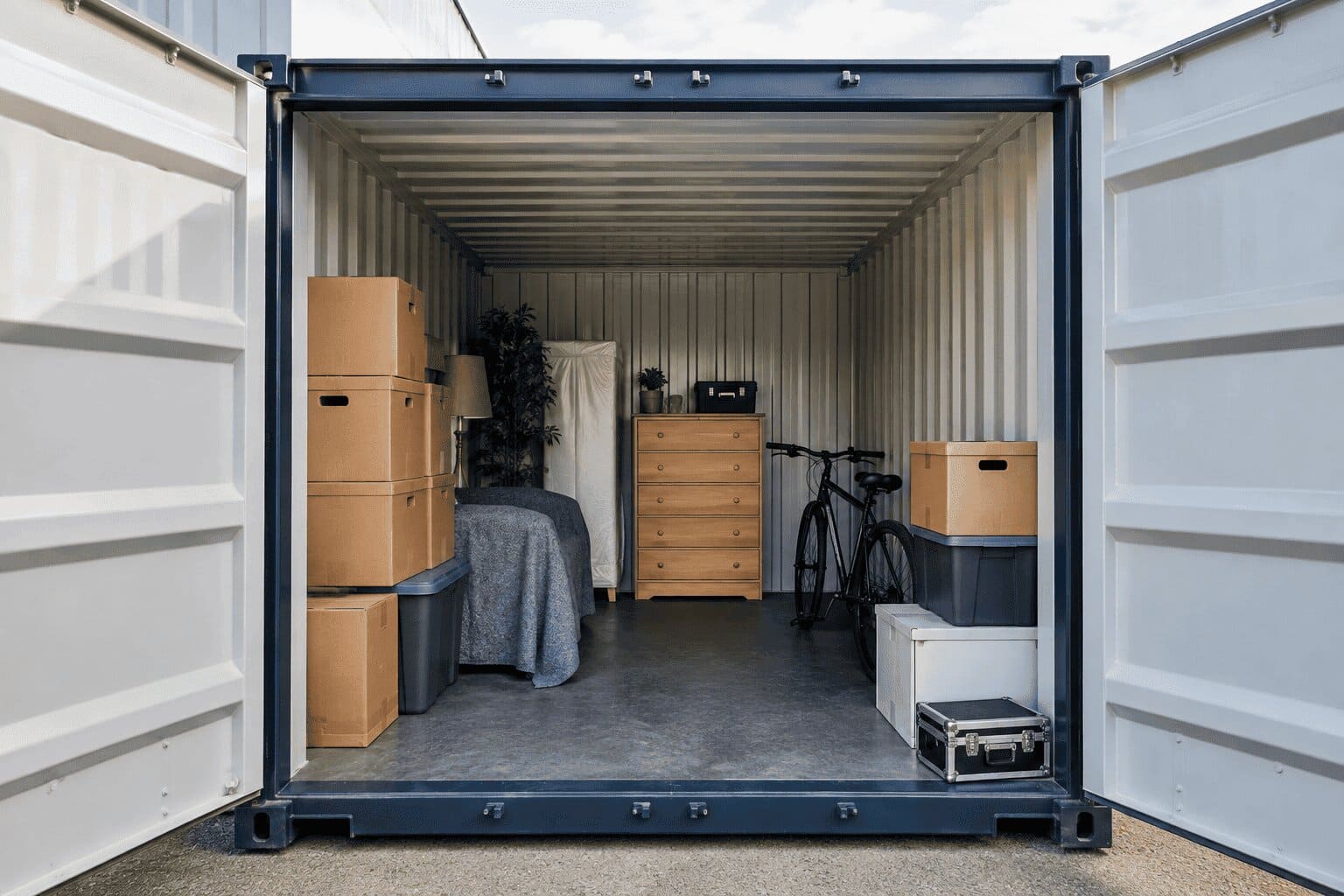
Whether you are moving home, renovating, downsizing or simply running out of space, self-storage containers can provide a practical way to keep belongings safely out of the way until you need them again.
If you are considering container storage, take a look at Boxpod Space’s self-storage containers to understand the types of storage available.
However, storing valuable items requires more thought than simply filling boxes and locking the door. From choosing secure self storage to preparing items correctly, a few sensible precautions can make a significant difference to how well your belongings are protected.
The key is knowing what you should store, what you should avoid storing and how to prepare your possessions before they go into a storage unit.
What Counts as a Valuable Item in Self Storage?
When people hear the word “valuables”, expensive jewellery or artwork may immediately come to mind. In reality, many stored possessions have financial, practical or sentimental value.
Items commonly placed into storage units can include:
- Furniture and household appliances
- TVs, computers and other electronics
- Tools and trade equipment
- Business stock and equipment
- Collectables and memorabilia
- Important documents and archived records
- Musical instruments
- Antiques
- Seasonal household belongings
- Personal possessions during a house move
An item’s value is not always determined by its price. A piece of furniture inherited from a family member, for example, may be difficult or impossible to replace.
For that reason, it is worth taking extra precautions whenever you place important belongings into storage.
The Dos of Storing Valuables in Self-Storage Containers
Do Choose Secure Self Storage
Security should be one of your first considerations when comparing storage providers.
Look beyond the lock on the individual container and consider how the entire site is protected. Good secure self storage should use several layers of security to reduce the risk of unauthorised access.
Features worth looking for include:
- A secure gated compound
- Controlled or coded entry
- CCTV monitoring
- Individual locks for storage spaces
- Good visibility around the site
- Clear access procedures
This is particularly important when using business self storage for tools, equipment or stock that your company relies on to operate.
Boxpod Space sites are located within secure gated compounds, monitored using CCTV and use controlled access alongside individual locks for units and yards.
Do Check Your Insurance Before Moving Items In
Never assume your belongings are automatically covered simply because they are inside a secure storage facility.
Check the terms of your home, contents or business insurance policy to establish whether possessions kept away from your usual premises remain covered. Depending on the policy and value of the items, additional storage insurance may be necessary.
Before moving expensive belongings, confirm:
- What your existing insurance covers
- Whether storage is included
- Any maximum claim limits
- Whether particular categories of items are excluded
- Whether proof of value is required
- Whether your storage provider has specific insurance requirements
For businesses, this is particularly important when storing high-value tools, machinery, inventory or equipment.
If you are unsure about storage requirements, Boxpod Space’s self-storage FAQs provide further information about using its containers and yards.
Do Create an Inventory
If you are storing dozens of boxes, it is surprisingly easy to forget exactly what is inside your container.
Create an inventory before moving anything into storage. It can be as simple as a spreadsheet listing each box, its contents and where it has been positioned.
For valuable belongings, consider recording:
- Item descriptions
- Serial or model numbers
- Approximate values
- Photographs
- Receipts or proof of purchase
- Which box or storage zone contains the item
Photographing valuable items before storage also gives you a record of their condition.
For business self storage, an inventory can be especially useful when several employees need to retrieve stock, tools or equipment from the same unit.
Do Clean and Dry Everything First
One of the most important storage rules is also one of the simplest: never put damp or dirty belongings straight into storage.
Moisture, food residue and dirt can contribute to unpleasant smells, staining and deterioration over time.
Before storing furniture, appliances or equipment:
- Clean the item thoroughly.
- Allow it to dry completely.
- Remove any food, liquids or other residue.
- Use an appropriate protective covering.
- Make sure refrigerators and freezers have been completely defrosted.
Give yourself enough preparation time rather than cleaning belongings immediately before loading your container.
Do Use Proper Packaging
A secure container protects belongings from the outside world, but items still need protection from knocks, scratches and pressure caused by other stored possessions.
Use packaging appropriate to each item rather than placing everything into the same type of box.
Useful materials include:
- Strong cardboard or plastic storage boxes
- Bubble wrap for fragile objects
- Furniture blankets
- Breathable furniture covers
- Dividers for glassware
- Protective corner guards
- Archival-quality boxes for appropriate documents
- Proper cases for electronics or equipment where available
Avoid relying on thin bin bags for long-term storage. They provide limited protection and can tear easily when moved.
Do Keep Valuables Off the Floor Where Appropriate
Shelving, pallets or other suitable raised storage can make a container easier to organise while providing additional separation for sensitive boxes.
This is particularly useful for documents, electronics, boxed stock and other possessions you would prefer not to have directly on the container floor.
If you introduce shelving, make sure it is stable and suitable for the weight you plan to place on it.
Not sure how much room you will need? Boxpod Space’s self-storage size guide explains how to choose enough space for your possessions while leaving room to move around your unit.
Do Store Heavier Items at the Bottom
Think of loading a storage container in the same way you would pack for a house move.
Heavy, robust objects should usually be positioned lower down, while lighter and more fragile boxes should sit above them.
Avoid creating tall, unstable stacks. Saving a small amount of floor space is not worth the risk of boxes collapsing onto valuable possessions.
Do Leave Yourself a Clear Route Through the Container
It can be tempting to use every available centimetre of your storage unit, but completely filling the space can make retrieving individual belongings extremely difficult.
Create a central walkway wherever space allows.
Position frequently needed items towards the entrance, with belongings you are unlikely to use for several months towards the back.
This is one of the biggest benefits of planning for accessible self storage rather than treating your unit as somewhere to simply deposit belongings. You can also find out more about easy access to self-storage containers before choosing your space.
The Don’ts of Storing Valuables in Containers
Don’t Store Irreplaceable Items Without Careful Consideration
A storage container can be an excellent option for furniture, equipment, stock and many everyday possessions. That does not mean every valuable item belongs there.
Think carefully before storing objects that are genuinely irreplaceable or exceptionally valuable, such as:
- Cash
- Valuable jewellery
- Passports and essential identity documents
- Original wills or critical legal documents
- Extremely rare collectables
- Highly valuable fine art
- Items requiring tightly controlled temperature or humidity
For certain belongings, a bank deposit facility, specialist archive or specialist climate-controlled service may be more appropriate.
Secure self storage should not be treated as a replacement for specialist storage where an item’s value, sensitivity or insurance requirements demand it.
Don’t Store Prohibited or Hazardous Items
Every storage facility will have rules covering what can and cannot be kept on site.
Restrictions commonly apply to hazardous, illegal, flammable or perishable materials.
Items that may be prohibited include:
- Flammable liquids
- Fuel
- Explosives
- Gas cylinders
- Hazardous chemicals
- Perishable food
- Illegal or stolen goods
- Waste
- Live animals
Policies vary between providers, so always check the storage terms or self-storage FAQs before bringing anything unusual to the site.
If you are storing equipment for a trade or business, check requirements for machinery containing fuel, batteries, chemicals or other potentially restricted materials.
Don’t Wrap Everything Tightly in Plastic
Plastic may appear to offer the best protection, but it is not always suitable for long-term storage.
Wrapping wooden or upholstered furniture tightly in non-breathable plastic can trap existing moisture rather than allowing the item to breathe.
Use appropriate furniture covers, blankets and packaging according to the material you are storing.
Fragile wooden furniture, electronics and fabrics may all require different approaches.
Don’t Overpack Boxes
Putting too much into a single box creates two problems.
First, the bottom of the box may fail when you lift it. Second, heavy boxes become much harder to move safely when you eventually need the contents.
Spread heavy objects between several smaller boxes and reserve larger boxes for lightweight possessions.
As a simple rule, if you cannot comfortably lift a box, it is probably too heavy.
Don’t Forget to Label Every Box
Six months after placing your belongings into storage, every plain cardboard box starts to look remarkably similar.
Labels should be specific. “Kitchen”, for example, is less useful than “Kitchen – glassware and serving dishes – FRAGILE”.
Label more than one side of each box so that its contents remain identifiable when boxes are stacked.
You could also number boxes and match those numbers with your inventory.
Don’t Block Frequently Needed Items
Think about how often you are likely to need each possession.
If your Christmas decorations are behind a sofa, five filing cabinets and 20 boxes, retrieving them in December becomes a much bigger job than necessary.
This matters even more for businesses using self-storage containers as operational overflow space.
Frequently used stock, packaging, tools and equipment should be positioned where they can be reached quickly. Archived documents or seasonal items can go further towards the back.
Extra Considerations for Business Self Storage
Businesses often have different priorities from household customers.
A tradesperson may need regular access to expensive tools, while an online retailer might need to collect stock several times each week. An office could simply need somewhere to keep archived documents and unused furniture.
Boxpod Space offers dedicated business self storage for businesses that need additional room for stock, tools, equipment or operational overflow.
If you are using business storage, consider creating separate zones for:
- Regularly used equipment
- Stock and inventory
- Packaging materials
- Archived paperwork
- Seasonal items
- Returns
- Spare furniture
- Marketing and event materials
Keep an up-to-date inventory and make sure employees who access the unit understand the organisation system.
Self storage can then become an extension of your working space rather than an unorganised collection of boxes.
For more advice, read why businesses use self-storage containers for office overflow which explores how additional storage can help growing businesses reclaim valuable working space.
How to Make Your Storage Container Easier to Access
Security is important, but convenience matters too.
Choosing accessible self storage and organising it correctly means you can retrieve belongings without repeatedly unloading the entire unit.
A simple layout could include:
Front: frequently needed tools, stock and seasonal items.
Middle: possessions required occasionally.
Back: long-term storage, archives and items unlikely to be required soon.
Leave a walkway and use clearly labelled zones wherever possible.
Boxpod Space offers storage for household and business use, with options designed to provide convenient access alongside secure gated facilities.
Frequently Asked Questions About Storing Valuables
Are self-storage containers safe for valuable items?
Self-storage containers can be suitable for many valuable household and business possessions when items are correctly prepared, insured and stored at a secure facility.
However, exceptionally valuable, sensitive or irreplaceable items may require a specialist storage environment.
Should I insure items kept in a storage container?
You should check your insurance arrangements before placing valuable belongings into storage. Do not assume your home or business policy automatically covers possessions stored elsewhere.
Can electronics be kept in storage units?
Many electronics can be stored, provided they are clean, dry, packed carefully and suitable for the storage conditions available. Back up important data before storing computers or other devices and check manufacturer guidance for sensitive equipment.
Can businesses keep tools and stock in self storage?
Yes. Business self storage is commonly used for tools, equipment, stock, packaging and other business materials.
Security, accessibility and good organisation become particularly important when stored items need to be retrieved regularly.
How should I organise a self-storage container?
Place heavy items at the bottom, keep fragile belongings protected, label boxes clearly and maintain a walkway. Frequently used possessions should remain near the entrance.
An inventory can also save significant time when you need to retrieve something later.
The Key Dos and Don’ts to Remember
Using self storage successfully comes down to security, preparation and organisation.
Do:
- Choose a secure, well-managed storage facility.
- Check your insurance.
- Clean and dry belongings before storing them.
- Use high-quality packaging.
- Create an inventory.
- Label everything clearly.
- Plan how you will access your belongings.
Don’t:
- Assume every valuable item is suitable for container storage.
- Store prohibited or hazardous materials.
- Put damp belongings into your unit.
- Overload boxes or create unstable stacks.
- Bury frequently used items at the back.
- Assume your belongings are automatically insured.
Taking a little extra time before moving your possessions can make your self-storage containers safer, easier to navigate and much more useful over the months ahead.
Find Secure Self Storage with Boxpod Space
Whether you need additional room during a house move, somewhere to keep furniture while renovating or extra business self storage for tools, equipment and stock, choosing the right storage solution can give you valuable space without losing easy access to your belongings.
Boxpod Space provides self-storage containers, units and yards for household and business customers, with secure gated sites, CCTV monitoring and controlled access.
You can find your nearest Boxpod Space location to see which storage facilities are available in your area.
Need more space? Explore Boxpod Space’s self-storage options or contact the Boxpod Space team today to find secure, accessible storage that suits your needs.
